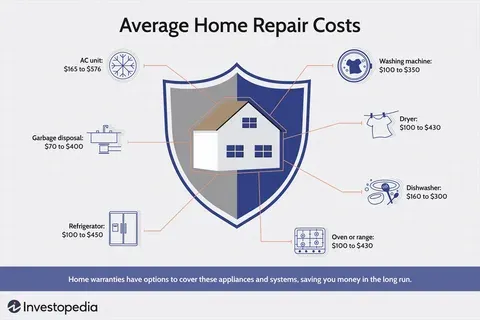
Home repairs are a fact of life. No matter how new or well-maintained your property is, something will eventually need fixing a leaking roof, a failing HVAC unit, deteriorating plumbing, or a crumbling foundation. The question most American homeowners ask isn't if they'll face repair costs, but how much those repairs will actually cost.
In 2026, rising labor costs, material price fluctuations, and ongoing inflation continue to shape what homeowners across the country pay for maintenance and repair services. Whether you're budgeting for routine upkeep or dealing with an emergency fix, understanding the real cost landscape is essential.
This comprehensive guide covers average home repair costs by service category, regional pricing differences, the factors driving those prices, and practical strategies to protect your wallet without cutting corners on quality.

National Overview: What Americans Spend on Home Repairs in 2026
According to industry data like American Housing Survey and homeowner surveys, the average U.S. household spends between $1,500 and $4,000 per year on home repairs and maintenance. However, this figure varies widely depending on the age of the home, geographic location, and the types of repairs needed.
A general rule in the real estate industry is the 1% Rule homeowners should budget roughly 1% of their home's value annually for maintenance and repairs. For a $350,000 home (close to the current U.S. median), that's approximately $3,500 per year.
For larger or unexpected repairs think foundation work, full roof replacement, or HVAC system replacement individual project costs can range from a few hundred dollars to well over $20,000.
Here is Bureau of Labor Statistics construction labor data : https://www.bls.gov/iag/tgs/iag23.htm
Repair Category | Low Estimate | High Estimate | National Average |
|---|---|---|---|
HVAC Repair | $150 | $1,200 | $350 |
HVAC Replacement | $5,000 | $12,500 | $7,500 |
Roof Repair | $300 | $1,500 | $750 |
Roof Replacement | $5,500 | $22,000 | $11,000 |
Plumbing Repair | $150 | $3,000 | $600 |
Electrical Repair | $200 | $2,500 | $700 |
Foundation Repair | $2,000 | $25,000 | $8,000 |
Kitchen Remodel | $10,000 | $75,000 | $27,000 |
Bathroom Remodel | $5,500 | $35,000 | $12,000 |
These are national averages your actual cost will depend significantly on where you live, what materials you choose, and the condition of your home.
Home Repair Cost Breakdown by Service Category
HVAC: Heating, Ventilation, and Air Conditioning
HVAC is one of the most common and costly home repair categories in the United States. A standard HVAC repair such as replacing a capacitor, fixing a refrigerant leak, or cleaning coils typically runs between $150 and $1,200, with most homeowners spending around $350.
A full system replacement, on the other hand, is a major financial commitment. Depending on the size of your home and the type of system (central air, heat pump, mini-split), replacement costs range from $5,000 to $12,500 or more. Homes in southern states with year-round cooling demands often face higher HVAC usage and therefore more frequent servicing needs.
Related Reading: 2026 HVAC Installation Cost Guide for Dallas, TX
Phoenix HVAC System Costs: Repair vs. Replacement Guide
Roofing
Roof repairs and replacements are among the most expensive projects a homeowner can face. A minor roof repair — patching a few shingles or sealing a small leak — averages between $300 and $1,500. A full roof replacement using asphalt shingles (the most common material) runs from $5,500 to $22,000, with the national average hovering around $9,000–$11,000 depending on square footage.
Metal roofing, tile, and slate options cost significantly more sometimes 2–3x the price of asphalt but come with longer lifespans and better weather resistance.
Related Reading: 2026 Texas Roof Replacement Cost Guide
Plumbing
Plumbing issues range from minor (a dripping faucet at $100–$200) to major (full pipe repiping at $3,000–$15,000). The most common repairs homeowners deal with include:
Clogged drain clearing: $100–$350
Toilet repair or replacement: $150–$600
Water heater replacement: $1,000–$3,500
Burst pipe repair: $400–$2,000+
Sewer line repair or replacement: $2,000–$10,000+
In high-cost urban areas like New York City, plumbing rates are dramatically higher due to labor costs and permitting requirements.
Related Reading: Plumbing Repair Costs in NYC: 2026 Complete Pricing Guide
Electrical
Electrical work is not a DIY-friendly category — most jurisdictions require licensed electricians, and improper wiring is a leading cause of house fires. Common costs include:
Outlet or switch replacement: $100–$300
Circuit breaker panel upgrade: $1,200–$4,000
Full rewiring of older homes: $8,000–$20,000+
Smoke/CO detector installation: $75–$200 per unit
Homes built before 1980 particularly those with knob-and-tube or aluminum wiring — often require significant electrical upgrades when selling or renovating.
Foundation Repair
Foundation issues are among the most anxiety-inducing (and expensive) repairs homeowners face. Minor crack sealing might cost $500–$1,500, while full foundation stabilization using piers or underpinning can reach $20,000–$30,000 or more in severe cases.
The national average for foundation repair sits around $4,000–$8,000, though coastal and clay-heavy soil regions like Texas, Florida, and the Gulf Coast see disproportionately high rates of foundation damage.
Related Reading: Foundation Repair Cost in Houston, TX: 2026 Pricing Guide
Florida Foundation Repair Costs: 2026 Complete Guide
Home Remodeling
Remodeling projects vary enormously in scope and price. Two of the most common are:
Kitchen remodels: Minor updates (cabinet refacing, new countertops) run $10,000–$25,000. Full gut renovations can exceed $75,000 in major metro areas.
Bathroom remodels: A basic refresh runs $5,500–$15,000. High-end primary suite bathrooms in California or New York can cost $35,000–$60,000+.
Related Reading: 2026 Bay Area Bathroom Remodel Costs: San Francisco vs. San Jose Budget Guide California Home Remodeling Costs 2026: Bay Area vs. LA Guide
State and Regional Cost Comparison
Home repair costs are not uniform across the United States. A roof replacement that costs $9,000 in Ohio might run $18,000 in San Francisco. These differences come down to four core variables: local labor rates, material supply chains, cost of living, and regional building codes.
Region | Relative Cost Level | Key Driver |
|---|---|---|
Northeast (NY, MA, CT) | Very High | High labor rates, strict permits |
West Coast (CA, WA, OR) | Very High | High COL, seismic building codes |
Southeast (FL, GA, SC) | Moderate–High | Hurricane codes, humidity-related damage |
Texas (DFW, Houston, Austin) | Moderate | Foundation issues, high demand |
Midwest (OH, IN, IL) | Moderate–Low | Lower labor costs, stable climate |
Mountain West (CO, UT, AZ) | Moderate | Growth-driven labor shortages |
Rural Areas (nationwide) | Variable | Limited contractor availability |
Why does geography matter so much?
In cities like New York or San Francisco, licensed contractors command premium rates simply because their cost of living is higher. Add in union labor requirements, strict building department oversight, and the need for permits on nearly every project, and costs can double compared to rural Midwest markets.
In the Southeast — particularly Florida — hurricane-resistant building codes require specific materials and methods that add to project costs. Texas homeowners in clay-rich soil regions like Houston and Dallas face above-average foundation repair bills due to soil expansion and contraction cycles.
Key Factors That Affect Home Repair Costs
Labor Costs
Labor typically accounts for 40–60% of any home repair bill. Skilled tradespeople licensed electricians, master plumbers, HVAC technicians — command $75–$200 per hour in most U.S. markets. In high-demand metro areas, those rates can climb to $250+ per hour.
Material Prices
Building material costs have remained elevated since 2021. Lumber, copper pipe, HVAC components, and roofing materials have all seen price increases driven by supply chain disruptions, tariff changes, and ongoing construction demand. In 2026, material costs continue to be a significant factor, particularly for major renovations.
Permits and Inspections
Many repairs require building permits, especially work involving electrical systems, plumbing, structural changes, or additions. Permit fees vary by municipality from $50 for a simple permit to $2,000+ for major structural work. Skipping required permits can lead to fines, complications when selling, and insurance issues.
Inflation and Seasonal Demand
Inflation has moderated from its 2022 peak but continues to influence contractor pricing. Additionally, demand spikes seasonally HVAC companies are busiest in early summer and late fall, roofing contractors see surges after major storms, and plumbers stay busy during winter freeze events. Scheduling repairs during off-peak periods can reduce costs by 10–20%.
Home Age and Condition
Older homes particularly those built before 1970 often involve hidden costs like asbestos abatement, lead paint remediation, outdated electrical panels, or galvanized pipes. These discovery costs can significantly increase the final repair bill.
Repair vs. Replacement: How to Make the Right Call
One of the most common dilemmas homeowners face is deciding whether to repair an aging system or replace it entirely. Here's a practical decision-making framework:
The 50% Rule: If the cost of repair exceeds 50% of the cost of a new replacement, it's generally smarter to replace.
Age of the System: Most HVAC systems last 15–20 years. Roofs (asphalt) last 20–30 years. Water heaters last 8–12 years. If a system is within 5 years of its expected lifespan, replacement is often the better investment.
Frequency of Repairs: If you've repaired the same system two or more times in the past three years, that's a strong signal that replacement will be more cost-effective long-term.
Energy Efficiency: Newer systems are dramatically more efficient. A 15-year-old HVAC unit might be running at 60–70% efficiency. A modern unit can run at 95%+ efficiency, reducing utility bills enough to help offset the replacement cost over time.
Related Reading: Repair or Replace Your HVAC System: 2026 Cost Analysis Guide
Cost-Saving Tips for U.S. Homeowners in 2026
Get multiple estimates. For any project over $500, get at least 3 written quotes from licensed contractors. Prices can vary by 30–50% for the same work.
Schedule during off-peak seasons. Book HVAC work in spring or fall, roofing in late summer or early fall (before storm season), and plumbing work during non-winter months when emergency calls are lower.
Ask about material choices. Contractors often have preferred (higher-margin) materials. Ask what alternatives are available at different price points without sacrificing quality or warranty.
Bundle projects where possible. If you need multiple repairs, ask if a contractor will bundle them for a discount. Mobilization costs (travel, setup) are incurred once instead of multiple times.
Don't skip preventive maintenance. Annual HVAC servicing ($75–$150) can prevent a $3,000 breakdown. Cleaning gutters twice a year can prevent $10,000+ in water damage. Prevention consistently outperforms reactive repair in total cost.
Check for utility rebates. Many U.S. utility companies offer rebates for energy-efficient HVAC systems, water heaters, and insulation upgrades. These rebates can offset 10–30% of project costs.
Consider home warranty coverage. A home warranty (typically $400–$700/year) can cover repair or replacement costs for major systems and appliances, capping your out-of-pocket exposure.

When to Hire a Professional and When DIY Has Limits
DIY projects can save money, but they're not appropriate for every situation. Here's a straightforward breakdown:
Always hire a licensed professional for:
Electrical panel work or any new wiring (fire and code risk)
Gas line repairs or gas appliance installation (explosion and CO risk)
Structural or foundation repairs (structural integrity)
Roofing work above 2 stories (fall risk)
Any work requiring a permit (code compliance)
Reasonable DIY territory (for handy homeowners):
Painting interior/exterior
Minor drywall patching
Installing flooring
Replacing faucets, toilets, or showerheads
Landscaping and yard maintenance
Installing ceiling fans (power off, low voltage)
The general rule: if a mistake could harm you, someone else, or void your homeowner's insurance policy, hire a licensed professional.
When selecting a contractor, verify their license and insurance status through your state's contractor licensing board. Check reviews on Google, Yelp, and the Better Business Bureau. And always get a written contract before work begins.
Related Reading: How to Choose a Reliable Home Contractor in the USA: A Complete Guide for 2026
2026–2027 Outlook: What's Changing in the Home Repair Market
Several trends are reshaping the home repair and maintenance landscape heading into 2027:
Labor shortages continue. The skilled trades workforce is aging, and fewer young workers are entering fields like plumbing, electrical, and HVAC. This supply-demand imbalance is expected to keep labor rates elevated for the foreseeable future.
Smart home integration is rising. AI-powered thermostats, smart leak detectors, and automated home monitoring systems are increasingly common. These technologies can detect problems early — before they become expensive emergencies — and represent a growing area of investment for proactive homeowners.
Related Reading: AI-Powered Smart Homes 2026: Top Tech Trends for U.S. Homeowners
Insurance scrutiny is tightening. In states like Florida, California, and Louisiana, homeowners insurance companies are increasingly refusing to renew policies on older roofs, homes with aluminum wiring, or properties in high-risk zones. This is creating urgency for repairs and upgrades that might have been deferred.
Material costs are stabilizing but not falling. While the extreme supply chain volatility of 2021–2023 has eased, lumber, copper, and other building materials remain priced well above pre-pandemic levels. Homeowners should plan budgets accordingly.
Energy-efficiency upgrades are being incentivized. Federal and state programs continue to offer tax credits and rebates for heat pumps, insulation, solar, and EV charging infrastructure — making energy-efficient home upgrades increasingly financially attractive.
Conclusion
Understanding home repair costs is one of the most practical things an American homeowner can do to protect their investment and avoid financial surprises. In 2026, costs continue to be shaped by labor markets, material pricing, geographic variation, and the age of the housing stock all factors that homeowners need to account for when planning and budgeting.
The key takeaways are straightforward: plan for 1–2% of your home's value in annual maintenance, get multiple quotes for major projects, prioritize preventive care, and never skip the permits. When in doubt about whether to repair or replace, use the 50% rule as your baseline and factor in age and efficiency.
Informed homeowners make better decisions — and in the world of home repair, better decisions translate directly to money saved and stress avoided.
Frequently Asked Questions (FAQs)
Q: What is the average annual cost of home repairs in the USA? Most U.S. homeowners spend between $1,500 and $4,000 per year on home maintenance and repairs. Homes that are older, larger, or located in high-cost metros tend to land at the higher end of that range.
Q: How do I know if a home repair cost estimate is fair? Get at least three written estimates from licensed contractors in your area. You can also cross-reference quotes with national cost databases and local homeowner forums. Be wary of estimates that are significantly lower than competitors — this can signal low-quality materials or unlicensed labor.
Q: Is it cheaper to repair or replace a failing system? It depends on the system's age, the severity of the issue, and the cost differential. A general guideline is to replace if the repair cost exceeds 50% of replacement cost or if the system is within 5 years of its expected lifespan.
Q: Why are home repair costs so much higher in California and New York? Higher costs in these states reflect elevated labor rates (driven by cost of living), stricter building codes, more rigorous permit requirements, and in California's case, seismic and fire-resistance standards that add to material and labor requirements.
Q: What home repairs should I never attempt as a DIY project? Electrical panel work, gas line repairs, structural or foundation work, and any project requiring a permit should always be handled by licensed professionals. The risk of injury, code violations, and insurance complications makes DIY work in these categories inadvisable for most homeowners.
Last updated: February 2026. Cost ranges reflect national averages compiled from contractor surveys, industry reports, and regional pricing data. Actual costs will vary based on your specific location, home condition, and contractor availability.