Johns Creek, nestled in Fulton County's northern corridor, stands as one of Georgia's most prestigious suburban communities where approximately 35% of residential properties depend on private septic systems rather than municipal sewer infrastructure. For homeowners in this affluent area where median home values exceed $500,000, understanding proper waste management isn't merely about regulatory compliance it's about protecting substantial property investments and ensuring family health and safety.
The evolution toward sustainable home solutions has transformed septic technology beyond basic waste disposal. Modern aerobic treatment units, advanced filtration systems, and intelligent monitoring technology now complement traditional anaerobic systems, offering Johns Creek residents more sophisticated options than ever. However, these advanced systems demand professional expertise for installation, ongoing maintenance, and timely repairs—making the selection of reliable septic system services in Johns Creek, GA one of your most critical home service decisions.
This comprehensive 2026 guide delivers everything Johns Creek homeowners need: understanding septic system cost variables, recognizing warning signs requiring immediate septic system repair service, finding qualified local contractors, and implementing maintenance strategies ensuring decades of trouble-free operation. Whether you're facing immediate problems requiring septic system repair near me solutions or planning proactive care to prevent costly emergencies, this resource provides actionable insights for informed decision-making.
Understanding Septic System Installation Costs in Johns Creek (2026 Pricing)
The cost to install septic system infrastructure in Johns Creek varies substantially based on property characteristics, soil composition, system technology, and regulatory requirements. Unlike previous years when conventional gravity systems dominated, 2026 homeowners face diverse technology options, each carrying distinct price points and long-term operational considerations.
2026 Septic System Installation Cost Comparison
System Type | Installation Cost | Best For | Lifespan | Key Advantages | Maintenance Level |
|---|---|---|---|---|---|
Conventional Gravity | $5,500 - $12,000 | Properties with good soil percolation, adequate land area, favorable slope | 25-30 years | Lowest upfront cost, minimal mechanical parts, proven reliability | Low - pumping every 3-5 years |
Aerobic Treatment System | $12,000 - $22,000 | Poor soil conditions, smaller lots, properties near water requiring advanced treatment | 20-25 years | Superior treatment (95%+ efficiency), smaller footprint, environmentally friendly | High - quarterly professional inspections required |
Mound System | $15,000 - $28,000 | High water table, shallow bedrock, sites with poor natural absorption | 20-30 years | Suitable for challenging sites, effective treatment, adaptable to terrain | Moderate - pump maintenance, regular monitoring |
Drip Distribution | $10,000 - $18,000 | Variable terrain, irregular lot shapes, precise effluent distribution needs | 15-20 years (components) | Minimal landscape disruption, uniform distribution, flexible installation | Moderate - regular filter cleaning, professional servicing |
Critical Factors Affecting New Septic System Cost
Soil Composition and Percolation Requirements
Georgia mandates percolation testing before any septic installation to determine soil absorption rates. Johns Creek's diverse geology—ranging from dense clay formations to more permeable sandy loam—directly impacts system design and cost. Professional soil evaluation runs $400-$800 and determines whether conventional systems suffice or advanced alternatives become necessary. According to the Georgia Environmental Protection Division, poor percolation rates (exceeding 60 minutes per inch) typically require aerobic or mound systems, adding $6,000-$15,000 to baseline installation costs.
Property Size and Topographic Challenges
Johns Creek building codes mandate minimum lot sizes for septic installations based on system type and projected daily wastewater volume. Conventional systems require substantial setbacks—typically 50 feet from wells, 10 feet from property boundaries, and 25 feet from surface water bodies. Sloped properties frequently necessitate pump systems, adding $2,500-$4,500 to total installation expenses. Properties under one acre often require advanced compact systems commanding premium pricing.
Regulatory Compliance and Permitting Expenses
Fulton County Environmental Health Department governs septic installations with permit fees ranging from $450-$850 depending on system complexity. All installations serving 4+ bedroom homes or properties with challenging site characteristics require professional engineering certification, adding $1,200-$2,500 to project costs while ensuring regulatory compliance and optimal system design.
System Capacity Based on Home Size
Residential septic systems are sized according to bedroom count rather than actual occupancy:
2-3 bedrooms: 1,000 gallon minimum tank capacity, $5,500-$10,000 complete installation
4-5 bedrooms: 1,250-1,500 gallon tank requirement, $8,000-$15,000 total project cost
6+ bedrooms: 1,500+ gallon tank with enhanced treatment capability, $12,000-$22,000+ comprehensive installation
Undersizing creates premature system failure and expensive emergency intervention, making proper initial capacity planning absolutely critical.
Emergency Warning Signs: When You Need Septic System Repair Service
Recognizing early warning indicators prevents catastrophic failures requiring complete septic system replacement cost expenditures averaging $15,000-$30,000 in Johns Creek. Most septic emergencies develop gradually, providing attentive homeowners opportunities to address problems through targeted septic system repair interventions costing $500-$3,500—dramatically less than full system replacement.
Critical Red Flags Requiring Immediate Professional Assessment
Sewage Backup Into Living Spaces
This represents a genuine emergency demanding immediate septic system repair service response. Sewage backing up through toilets, drains, or floor drains indicates complete system failure—from tank overfilling, drain field collapse, or distribution piping blockage. Never attempt DIY solutions when raw sewage enters your home. Professional emergency services cost $350-$800 for after-hours response but prevent extensive property damage, health hazards, and potential environmental violations.
Persistent Standing Water Above Drain Field
Healthy drain fields remain invisible—you shouldn't see, smell, or step in effluent. Standing water, constantly saturated ground, or unusually lush vegetation growth above the drain field signals hydraulic failure where effluent surfaces instead of percolating through soil. This often results from drain field saturation due to excessive water consumption, tank outlet obstruction, or aerobic septic system component malfunction. Repairs range from $1,500-$8,000 depending on whether simple unclogging resolves the issue versus drain field replacement necessity.
Multiple Slow-Draining Fixtures Simultaneously
When several fixtures drain slowly at the same time—not just one problematic drain—suspect septic system issues rather than individual pipe clogs. This suggests tank fullness requiring pumping ($275-$450), distribution box blockage ($400-$1,200 repair cost), or beginning drain field failure. Addressing slow drainage early through professional septic system service near me providers prevents progression to complete system collapse.
Strong Sewage Odors Near Tank or Drain Field
Properly functioning septic systems produce essentially no detectable odor at ground level. Persistent sewage smells near the tank indicate potential seal failures, structural cracks in the tank, or inadequate venting. Odors near the drain field suggest effluent surfacing due to system overload or soil saturation. Professional inspection costs $150-$350 but identifies specific problems before they escalate into major failures requiring fixing septic system components costing thousands.
Unusual Gurgling Sounds from Plumbing Fixtures
Abnormal gurgling, bubbling, or unusual sounds when using plumbing fixtures indicate air displacement issues within your septic system. This often precedes backup events and suggests tank fullness, vent pipe blockage, or developing drain field problems. Schedule professional evaluation immediately—this early warning frequently allows preventive intervention costing $300-$1,500 rather than emergency repairs running $3,000-$8,000+.

Aerobic Septic System Specific Warning Indicators
Alarm System Activation
Aerobic septic system installations include alarm panels monitoring critical functions—air pump operation, timer cycling, high water levels. Any alarm activation requires immediate professional response. Continuing system use with non-functioning aeration destroys the biological treatment process, requiring expensive re-establishment costing $800-$2,500.
Visible Mechanical Component Failure
Aerobic systems rely on air pumps, control timers, spray distribution heads, and electrical control panels. Any visible damage, unusual sounds from the air pump (grinding, squealing, clicking), or non-functioning spray distribution demands prompt professional service. Component replacement costs $300-$1,800 depending on the specific part, but delayed repairs often cascade into complete system failure requiring $4,000-$12,000 in comprehensive restoration work.
Professional Septic System Maintenance & Cleaning Services
Proactive septic system maintenance services represent the single most cost-effective investment Johns Creek homeowners can make in septic system longevity. Regular professional maintenance extends system lifespan by 40-60% while dramatically reducing emergency repair probability and associated costs.
Essential Septic System Cleaning Services Schedule
Routine Tank Pumping Requirements
Frequency: Every 3-5 years for typical residential usage (3-4 person household)
Cost in Johns Creek: $275-$450 for standard 1,000-1,500 gallon tanks
Process: Professional pumping removes accumulated solids (sludge) and floating scum layer, preventing outlet blockage and drain field contamination
Timing Factors: More frequent pumping needed for garbage disposal use, larger households, or insufficient tank size relative to home occupancy
According to the EPA Septic System Guide, households should pump when the bottom of the scum layer reaches within 6 inches of the outlet or the top of the sludge layer comes within 12 inches of the outlet. Professional technicians measure these levels during pumping visits and recommend appropriate future service intervals based on actual conditions.
Effluent Filter Cleaning and Replacement
Modern septic systems incorporate effluent filters preventing solids from entering drain fields. These require cleaning every 1-3 years depending on household wastewater characteristics. Professional septic system cleaning services charge $85-$200 for filter maintenance—dramatically less expensive than drain field repairs caused by filter neglect running $3,500-$12,000.
Aerobic System Maintenance Contracts
Georgia regulations mandate professional maintenance contracts for aerobic septic system installations. These comprehensive service agreements typically cost $250-$500 annually and include:
Quarterly inspections of all mechanical components
Air pump performance verification and adjustment
Chlorine tablet replenishment (if system includes disinfection stage)
Alarm system functionality testing and battery replacement
Annual reporting to Fulton County Environmental Health Department
Priority emergency service response for contract holders
Attempting to bypass professional maintenance contracts violates Georgia regulations and voids system warranties false economy creating expensive future problems.
Comprehensive Maintenance Service Programs
Annual Professional Inspection Programs
Annual professional inspections cost $150-$350 but identify developing problems when repairs remain affordable rather than catastrophic. Thorough inspections include:
Tank structural integrity assessment for cracks, leaks, or deterioration
Inlet and outlet baffle condition verification
Distribution box inspection and leveling confirmation
Drain field observation for surfacing effluent or excessive vegetation
Mechanical component testing for pumps, timers, and controls on advanced systems
Detailed reporting with photographic documentation for homeowner records
Many Johns Creek service providers offer inspection bundling with pumping services at reduced combined pricing ($375-$650 for both services performed simultaneously).
Biological Treatment Enhancement
Professional-grade bacterial and enzyme treatments help maintain optimal microbial populations for waste breakdown. While not substitutes for regular pumping, these treatments cost $45-$125 annually and enhance overall system performance. Homeowners should avoid harsh chemical cleaners, excessive antibacterial soaps, and large quantities of chlorine bleach—all disrupt beneficial bacterial colonies essential for effective waste treatment.
Septic System Cost Analysis: Maintenance vs Repair vs Replacement
Understanding when to invest in septic system repair versus complete replacement requires professional assessment and financial analysis. This comprehensive comparison illustrates why proactive maintenance and timely repairs prove far more economical than reactive replacement strategies.

Complete Septic Service Cost Comparison Table
Service Category | Cost Range | Recommended Frequency | Primary Benefits | Long-Term Value Impact |
|---|---|---|---|---|
Routine Tank Pumping | $275 - $450 | Every 3-5 years | Removes accumulated solids, maintains hydraulic efficiency, prevents backups | Essential preventive maintenance avoiding $15,000+ system failures |
Professional Annual Inspection | $150 - $350 | Yearly (highly recommended) | Early problem detection, regulatory compliance documentation, property sale preparation | Identifies $500-$2,000 repairs before escalation to $10,000+ emergencies |
Effluent Filter Service | $85 - $200 | Every 1-3 years | Protects drain field from solids contamination, maintains flow rates | Prevents $8,000-$15,000 drain field replacement necessity |
Minor Component Repairs (baffles, lids, risers, access ports) | $200 - $1,500 | As needed based on inspection | Addresses specific component failures, maintains system integrity | Extends overall system operational life 5-10 years |
Pump Replacement (aerobic systems, mound systems, lift stations) | $800 - $2,200 | Every 7-12 years typical | Restores proper effluent distribution and treatment capability | Critical for advanced systems, prevents complete system failure |
Distribution Box Repair/Replacement | $400 - $1,500 | Rare with proper maintenance | Ensures even drain field loading, prevents localized failures | Maintains drain field longevity and treatment efficiency |
Partial Drain Field Restoration | $3,500 - $12,000 | Only when hydraulic failure occurs | Restores soil absorption capacity, extends system life | Alternative to complete replacement when tank remains structurally viable |
Complete System Replacement | $15,000 - $30,000+ | Every 25-40 years with proper care | New system with modern technology, full regulatory compliance, warranty protection | Major expense but postponable through diligent preventive maintenance |
Septic System Inspection Cost Considerations
Pre-purchase home inspections in Johns Creek typically include visual septic assessment but rarely involve comprehensive system evaluation. Specialized septic inspections cost $300-$550 and include complete tank pumping, camera inspection of distribution piping, drain field percolation testing, and detailed condition reporting. For properties exceeding 15 years old, this investment protects buyers from inheriting failing systems requiring immediate replacement costing $15,000-$30,000.
When to Schedule Specialized Inspection:
Before purchasing any property with septic system
Properties over 15 years old without documented maintenance history
Homes showing any warning signs (slow drains, odors, wet areas)
Before completing major home additions increasing wastewater volume
When selling property to provide documentation to prospective buyers
Septic System Replacement Cost Analysis
Complete replacement represents major expense but modern systems offer significant advantages including improved treatment capability, reduced environmental impact, smaller physical footprints, and smart monitoring technology integration. Financing options through home equity lines, specialized septic improvement loans, and contractor payment plans make replacement financially manageable. Some Johns Creek homeowners qualify for low-interest loans through Georgia environmental programs when upgrading failing systems to advanced treatment technology meeting enhanced environmental standards.
Replacement Triggers:
Tank structural failure (major cracks, collapse, irreparable damage)
Complete drain field failure with restoration not viable
System non-compliance with current regulations for property changes
Repeated failures despite proper maintenance and repairs
Property expansion requiring increased capacity beyond current system

How Does a Septic System Work? Complete Process Explanation
Understanding how does a septic system work helps Johns Creek homeowners appreciate maintenance importance and recognize potential problems early. Modern residential septic systems function as sophisticated on-site wastewater treatment facilities operating through integrated biological, chemical, and physical processes.
The Four-Stage Septic Treatment Process
Stage 1: Wastewater Collection and Primary Separation
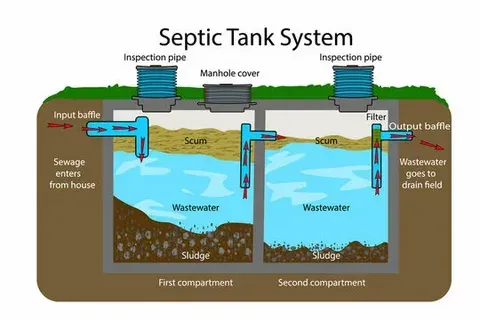
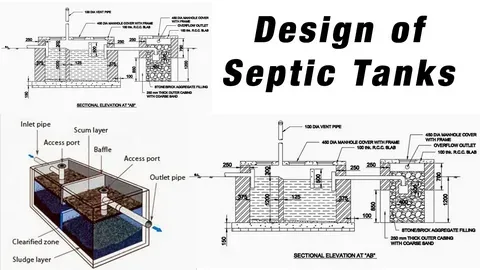
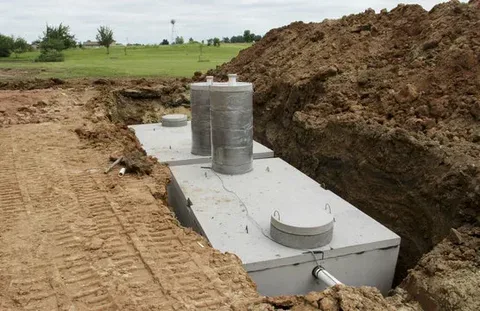
All household wastewater from toilets, sinks, showers, laundry machines, and dishwashers flows through your home's drain piping into the septic tank—a watertight underground container typically constructed from concrete, fiberglass, or high-density polyethylene. Tank sizes range from 1,000-2,000 gallons depending on home size and bedroom count.
Inside the tank, gravity-driven separation begins immediately:
Scum layer (fats, oils, grease, lighter materials) floats to the top
Effluent (clarified liquid wastewater) occupies the middle zone
Sludge (heavier solids, waste particles) settles to the bottom
Beneficial anaerobic bacteria naturally present in wastewater begin breaking down organic matter in the sludge layer, reducing solid volume by approximately 40-60%. The tank typically retains wastewater for 24-48 hours, allowing adequate separation before effluent exits toward the drain field.
Stage 2: Effluent Distribution Systems
Partially treated effluent exits the septic tank through the outlet baffle a critical device preventing scum and sludge from leaving the tank. In conventional gravity systems, effluent flows to a distribution box that evenly divides flow among multiple drain field trenches, ensuring uniform treatment area usage and preventing localized overload.
Advanced systems utilize pump chambers with timed dosing mechanisms, delivering precise effluent quantities to drain fields or spray distribution systems at optimal intervals. This controlled delivery prevents soil saturation and enhances biological treatment efficiency.
Stage 3: Biological Treatment in Soil
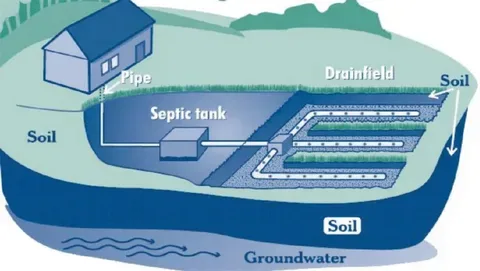
Conventional Drain Field Operation: Effluent percolates through perforated distribution pipes buried in gravel-filled trenches (typically 18-36 inches below ground surface). As effluent seeps into surrounding soil, beneficial aerobic bacteria in the soil's biological mat layer provide final treatment, removing harmful pathogens, nutrients, and remaining organic matter. Properly functioning drain fields treat wastewater to 85-90% purity before it reaches groundwater tables.
Aerobic Treatment Unit Process: Aerobic septic systems inject oxygen into wastewater, supporting aerobic bacterial colonies that provide superior treatment (95%+ pathogen removal) compared to anaerobic processes. These systems create conditions similar to municipal treatment plants but scaled appropriately for individual residential properties.
Stage 4: Final Percolation and Groundwater Integration
Treated effluent continues percolating downward through various soil layers, undergoing further natural filtration through sand, clay, and rock formations. By the time treated wastewater reaches groundwater (typically 4-8 feet below drain field depth), it meets or exceeds safe drinking water standards for pathogen content and biological oxygen demand.
This natural treatment cycle, when properly maintained, operates indefinitely without environmental harm provided homeowners avoid drain field vehicle traffic, excessive water usage patterns, and harmful chemical disposal that disrupts essential biological treatment processes.
Finding the Best Septic System Service Near Me in Johns Creek
Selecting qualified professionals for septic system service near me requirements demands verification of credentials, relevant experience, and established local reputation. Johns Creek's affluent homeowner base has attracted numerous service providers, making quality differentiation essential for optimal outcomes.
Essential Verification Checklist for Service Providers
Required Licensing and Insurance
Georgia Department of Public Health Master Installer/Pumper License (verify at Georgia DPH website)
Fulton County Environmental Health Department approval for local work
General liability insurance minimum $500,000 coverage (request certificate)
Workers' compensation insurance protecting employees
Surety bonding for financial accountability
Experience and Professional Qualifications
Minimum 5 years serving Johns Creek and North Fulton County area
Specific documented experience with your particular system type
References from recent Johns Creek clients (verify through direct contact)
24/7 emergency service availability for critical situations
Active membership in Georgia Onsite Wastewater Association (GOWA)
Service Capabilities and Equipment
Comprehensive service range: pumping, inspection, repair, installation, maintenance
Advanced diagnostic equipment including cameras, electronic locators, soil testing capability
Multiple service vehicles indicating established, stable operation
Written estimates provided before any work begins
Warranties on repairs and installations (minimum 1 year parts and labor)
Local Reputation Verification
Better Business Bureau rating of A or A+ preferred
Google Business reviews averaging 4.5+ stars with minimum 50+ reviews
Nextdoor neighborhood recommendations from actual Johns Creek residents
Demonstrated longevity in community (established businesses less likely to disappear after problems arise)
Critical Questions Before Hiring
"What specific septic system types do you regularly service and maintain?" (Verify actual experience with your exact system configuration)
"Can you provide detailed, itemized written estimates before starting any work?" (Avoid vague "typical job" pricing approaches)
"What specific warranties do you offer on repairs, parts, and installations?" (Reputable providers stand behind their work)
"How quickly can you respond to genuine emergency situations?" (Distinguish true 24/7 availability from answering service callbacks)
"Will you provide required documentation for Fulton County compliance?" (Essential for certain repairs and all new installations)
For comprehensive guidance on selecting reliable home service contractors across all categories, reference our detailed Choose Reliable Contractors USA Homeowner Guide 2026.
Expected Service Costs in Johns Creek (2026)
Routine pumping (1,000-1,500 gallon capacity): $275-$450
Emergency pumping (after-hours, weekend, holiday): $350-$600
Comprehensive professional inspection: $150-$350
Pre-purchase specialized evaluation: $300-$550 (typically includes pumping)
Effluent filter cleaning service: $85-$150
Minor repairs (baffle replacement, lid repair, riser installation): $200-$800
Pump replacement (lift stations, aerobic systems): $800-$2,200
Distribution box repair or replacement: $400-$1,500
Partial drain field restoration: $3,500-$8,000
Complete system replacement: $15,000-$30,000+
Always request detailed quotes from 2-3 licensed providers for major work, but avoid selecting based solely on lowest price—quality, reliability, and warranty support matter significantly more than saving $200 on a $10,000+ project.
For additional professional service resources and verified contractor listings, visit our comprehensive Professional Services Category featuring qualified contractors across multiple home service specialties.
Conclusion: Protecting Your Johns Creek Property Investment
Reliable septic system services in Johns Creek, GA represent essential infrastructure maintenance protecting both substantial property value and family health. With appropriate professional care, modern septic systems provide 25-40 years of trouble-free operation at total lifecycle costs dramatically lower than emergency-driven reactive maintenance approaches.
The financial justification for proactive maintenance proves compelling: investing $400-$800 annually in regular pumping and professional inspection prevents the 70% probability of emergency repairs costing $2,000-$8,000 that Johns Creek homeowners without established maintenance programs typically experience. More significantly, proper ongoing maintenance postpones or entirely eliminates premature system replacement averaging $20,000-$25,000 in this market.
Whether you need immediate septic system repair near me solutions for emerging problems or want to establish comprehensive preventive maintenance protecting your investment long-term, Johns Creek offers numerous qualified professionals ready to serve. Verify credentials thoroughly, check local references carefully, and prioritize providers demonstrating genuine expertise with your specific system type and configuration.
Take Action Today: Don't wait for septic emergencies to force last-minute contractor selection. Establish relationships with licensed professionals now, schedule any overdue pumping or inspection services, and implement the proven maintenance practices outlined in this comprehensive guide. Your property value, family health, and long-term financial security all benefit substantially from proactive septic system care and professional management.