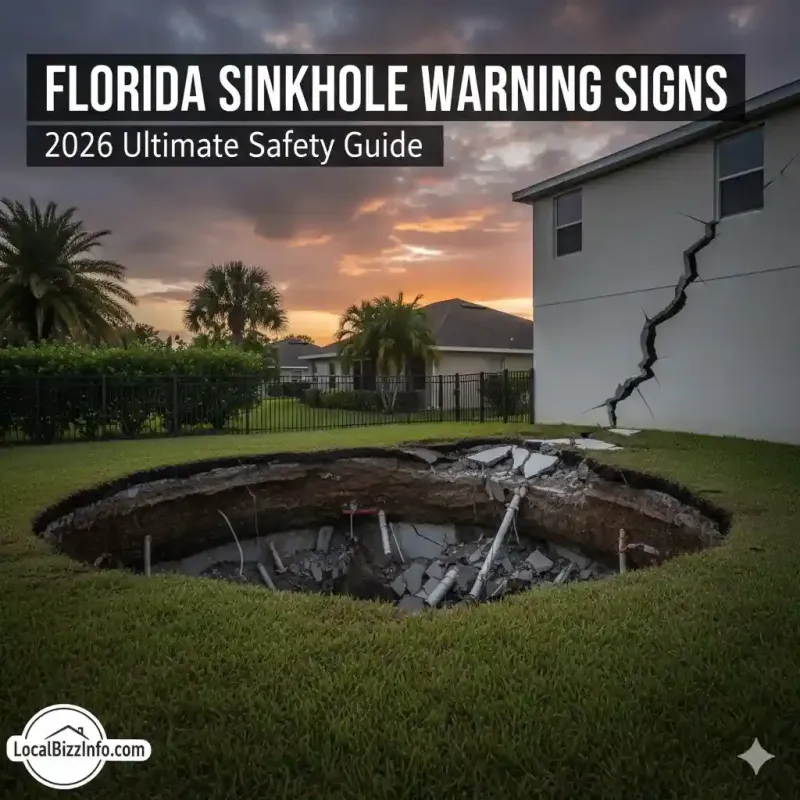
Florida homeowners face a hidden threat beneath their properties sinkholes. The state's unique limestone foundation makes it particularly vulnerable to ground collapse, turning what seems like solid earth into a potential hazard. Recognizing early warning signs can mean the difference between a minor repair and catastrophic property loss.
This comprehensive guide examines the critical indicators of sinkhole activity, explains the science behind Florida's geological vulnerability, and provides actionable steps for protecting your home investment in 2026.
Why Florida Is America's Sinkhole Hotspot
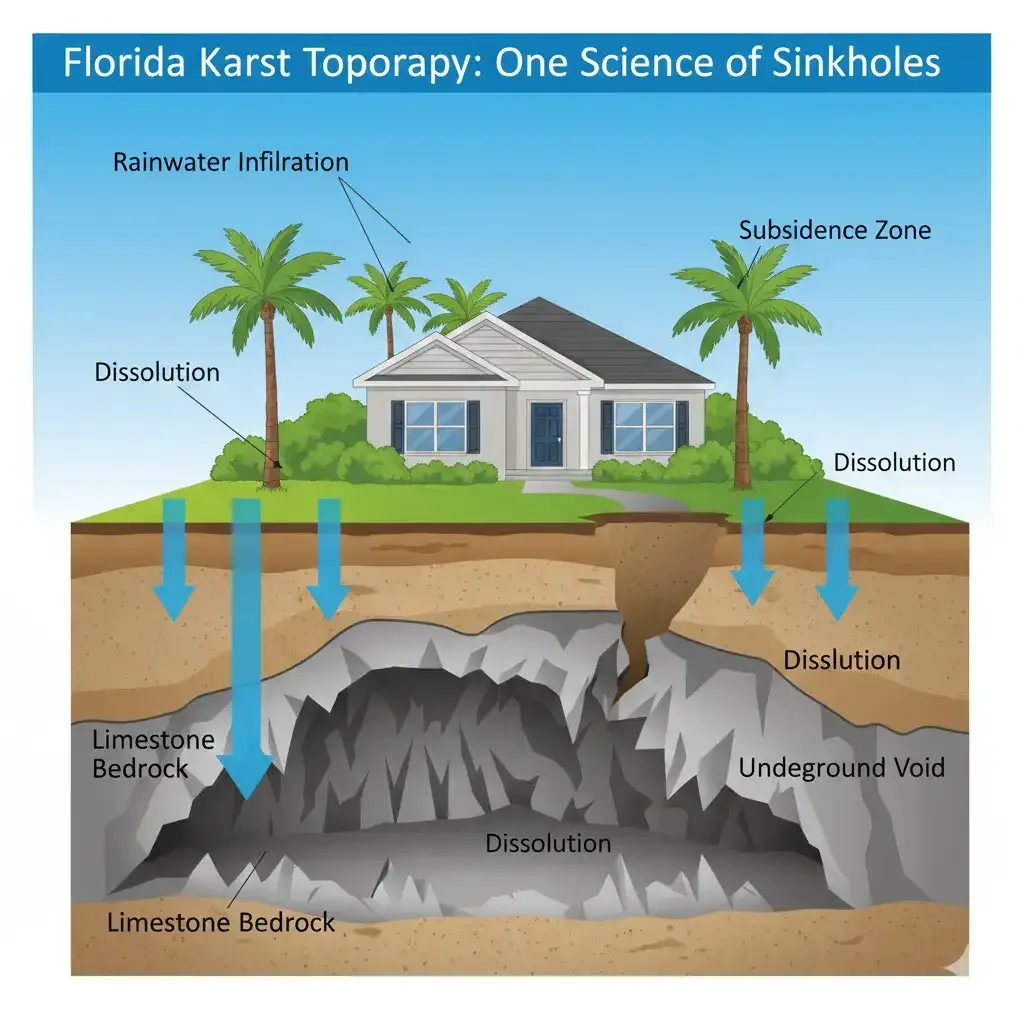
The foundation of Florida's sinkhole problem lies in its geology. Much of the state rests on carbonate bedrock, predominantly limestone. This seemingly solid rock has a weakness: it dissolves when exposed to acidic groundwater over extended periods.
As rainwater seeps through soil and becomes slightly acidic, it gradually erodes the limestone, creating underground caverns and voids. According to the U.S. Geological Survey (USGS), Florida's karst topography makes it one of the most sinkhole-prone states in America. When these hollow spaces can no longer support the weight of the soil and structures above them, the ground gives way.
For property owners, this means your home isn't simply sitting on stable ground it's positioned above a slowly changing underground landscape that could shift at any moment. Understanding your foundation's structural integrity is essential for long-term safety.
Warning Sign #1: Structural Cracks Tell a Story
Not all cracks signal danger, but certain patterns demand immediate attention. Understanding the difference between normal settlement and sinkhole-related damage is crucial.
Interior Warning Signs
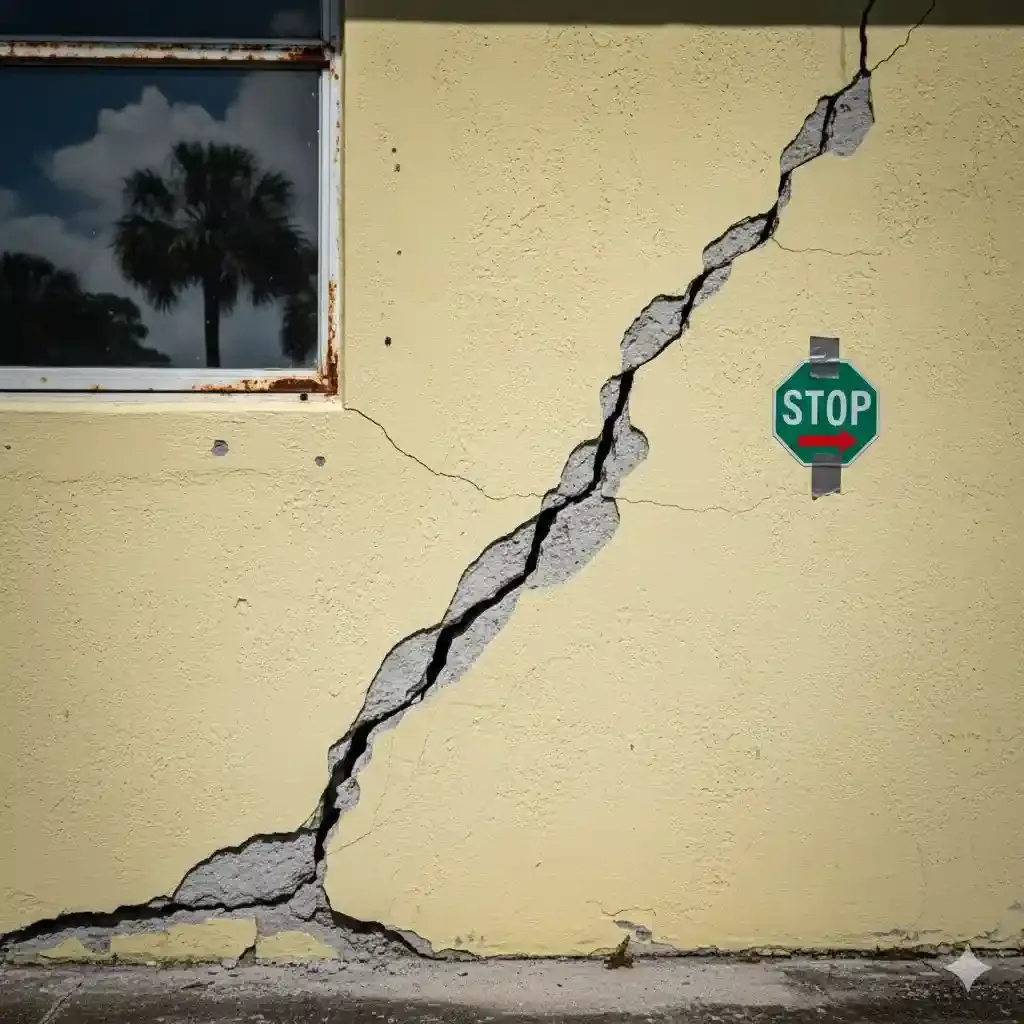
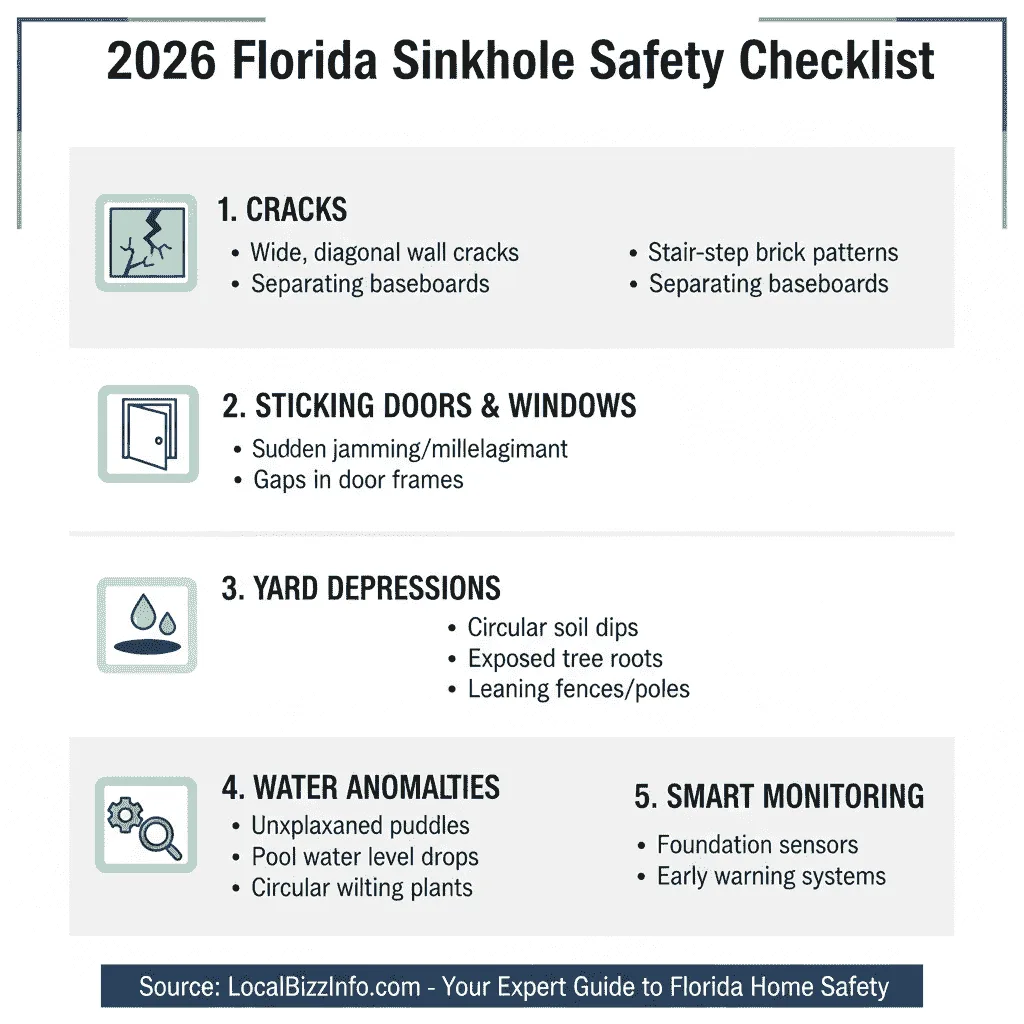
Examine your interior walls carefully. Cracks radiating from door and window corners deserve particular scrutiny. The Florida Department of Environmental Protection notes that structural professionals in 2026 flag "stair-step" patterns in masonry or concrete block walls as high-priority warning signals indicating ground movement beneath your foundation.
Foundation and Floor Indicators
Circular crack patterns in your foundation or tile floors represent classic evidence of void formation directly underneath that specific location. These patterns suggest the ground is literally being pulled downward into an underground cavity.
Watch for separation between baseboards and walls, or crown molding pulling away from ceilings. These gaps indicate your floors are dropping, even if the movement seems minimal at first glance. If you're experiencing foundation issues, check out our detailed Florida Foundation Repair Costs 2026 Guide to understand what repairs might involve.
Warning Sign #2: Doors and Windows That Suddenly Misbehave
Florida foundation specialists, including teams at Alpha Foundations, consistently report that changes in how doors and windows operate rank among the most common early indicators of sinkhole activity.
Sinkholes rarely cause uniform settling. Instead, they typically affect one section or corner of a structure, creating an uneven tilt. This subtle shift applies tremendous stress to door and window frames, causing warping and misalignment.
If a door that previously opened smoothly now sticks or refuses to latch properly and this change occurred relatively quickly the ground beneath your home may be shifting. The same applies to windows that suddenly become difficult to open or close. Learn more about structural warning signs in homes to identify other potential problems.
Warning Sign #3: Your Yard Provides Early Warnings
Outdoor spaces often reveal sinkhole development before any interior damage becomes apparent. Regular property inspections can catch these exterior clues early.
Ground Depression Patterns
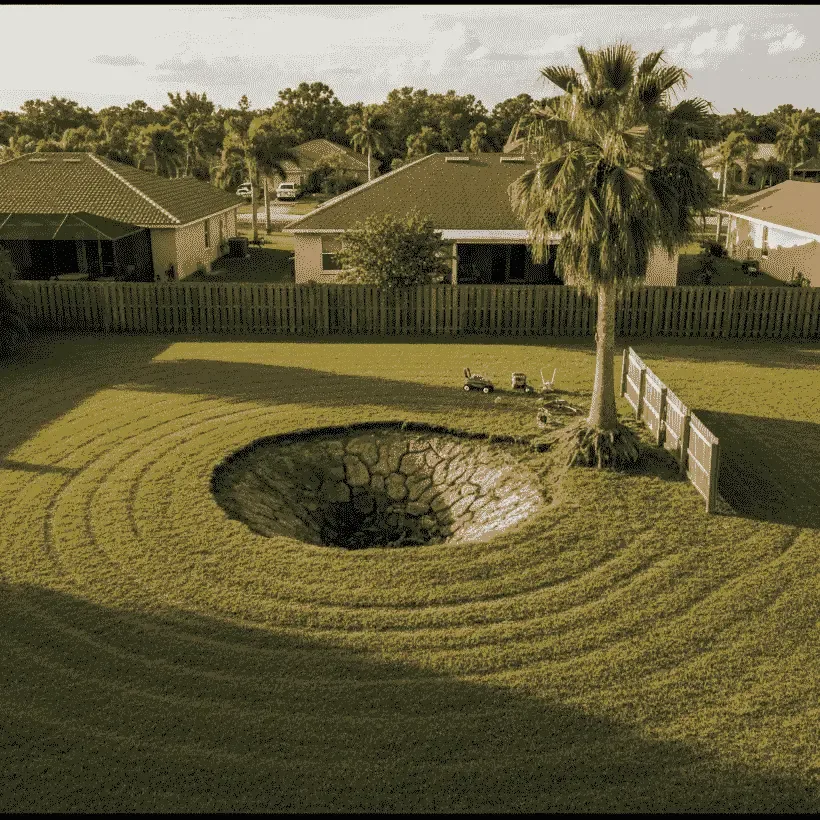
Circular depressions that appear in your lawn, creating shallow bowl-shaped areas, represent major red flags. These visible dips indicate the soil is collapsing into underground voids. The National Ground Water Association emphasizes that monitoring yard changes is critical for early detection.
Tree and Root Behavior
Trees provide valuable diagnostic information. Roots that were previously buried but are now exposed suggest topsoil has washed down into underground cavities. The soil literally drains away, leaving roots visible that should be covered.
Structural Tilting
Fences, utility poles, mailboxes, and even trees that begin leaning at unusual angles indicate compromised load-bearing capacity in the soil. These structures lean because the ground can no longer support their weight evenly.
Warning Sign #4: Unusual Water and Vegetation Patterns
Water plays the lead role in creating sinkholes, so changes in water behavior provide critical diagnostic clues in 2026.
Unexpected Pooling
Areas that suddenly retain water after years of proper drainage suggest the ground has depressed. These new low spots collect water because the surface elevation has changed. Poor drainage can also lead to other problems read our guide on preventing water damage in Florida homes.
Vegetation Death Patterns
Circular patches of dying grass or plants can indicate root systems can no longer access the water table as soil drops into developing voids. This creates a paradoxical situation where the surface might look dry while underground collapse is occurring.
Swimming Pool Warning Signs
Rapid water level drops combined with new cracks in pool shells represent catastrophic indicators requiring immediate professional evaluation and potentially emergency evacuation. If you notice pool issues, consult our pool maintenance and repair guide immediately.
Warning Sign #5: Modern Monitoring Technology
Today's homeowners aren't limited to visual inspections. Smart home technology now includes sensors capable of detecting microscopic foundation movements long before human eyes can spot them.
These integrated monitoring systems track structural health continuously, providing early warnings when foundations begin shifting. For homeowners concerned about property stability, our Smart Home Installation Cost Guide explains the investment required for this technology and offers peace of mind through early detection capabilities.
The 2026 Sinkhole Safety Assessment Matrix
Use this comparison framework to evaluate whether your property requires professional geological or structural engineering inspection:
Assessment Criteria:
Wall Cracks: Hairline and vertical = lower concern | Wide and diagonal with progression = high concern
Doors/Windows: Minor seasonal sticking = normal | Sudden jamming or lock failure = investigate immediately
Yard Surface: Gentle slopes = typical | Sudden circular depressions = urgent attention needed
Outdoor Structures: Straight alignment = acceptable | Leaning poles or trees = concerning
Pavement: Surface-level cracks = monitor | Deep separating fissures = professional assessment required
Understanding the Full Scope of Sinkhole Damage
The destruction extends far beyond a simple hole in the ground. Sinkholes compromise entire structural systems.
Infrastructure Failure
Ground movement can rupture underground utility lines carrying water, sewage, or natural gas. These secondary failures can trigger flooding, contamination, or fire hazards that compound the original problem. If water line damage occurs, you may need emergency plumbing repair services.
Complete Structural Compromise
Severe cases result in properties being condemned as uninhabitable. This declaration effectively eliminates the property's market value, representing total financial loss.
Economic Consequences
Without adequate insurance coverage, sinkhole remediation can financially devastate homeowners. Many Florida residents consult specialized sinkhole damage attorneys to ensure their insurance policies properly cover the geological conditions specific to their property location.
Repair Costs and Insurance Navigation
Once sinkhole activity is confirmed, the immediate question becomes cost estimation and insurance coverage.
Florida foundation repair represents specialized work typically involving techniques like underpinning or chemical grouting to fill underground voids and stabilize structures. According to HomeAdvisor, costs vary significantly based on damage severity and geographic location. High-risk zones including Pasco and Hernando Counties often see different pricing than other regions.
Water infiltration or drainage problems that contributed to soil erosion may require additional moisture control solutions. Similar to how homeowners in desert climates need climate-specific solutions (see our Phoenix HVAC System Costs 2026), Florida properties need moisture management systems. Proper drainage systems and preventative maintenance consistently cost less than emergency structural repairs.
For a complete breakdown of what to expect financially, review our comprehensive Florida Foundation Repair Costs 2026 Guide.
Frequently Asked Questions
How do you definitively determine if your home sits above a sinkhole?
Professional geological surveys using ground-penetrating radar provide the most reliable assessment. The Florida Geological Survey offers resources for finding qualified professionals. Initial indicators include circular foundation cracks and sudden soft spots appearing in your yard.
Which Florida regions have the lowest sinkhole risk?
While no area is completely immune, South Florida including Miami-Dade County and the Florida Keys typically experiences lower risk compared to Central Florida's "Sinkhole Alley" spanning the Tampa and Orlando metropolitan areas.
What are the very first signs that typically appear?
Initial indicators usually manifest as small diagonal cracks near door and window frames that noticeably expand over several weeks.
Does standard homeowners insurance cover sinkhole damage in Florida?
Florida law requires insurers to offer coverage for "catastrophic ground cover collapse," however comprehensive "sinkhole coverage" typically requires purchasing an additional policy rider that doesn't come standard. Consult the Florida Office of Insurance Regulation for current requirements.
Your Action Plan: What to Do When You Spot Warning Signs
If you identify these indicators, stay calm but act decisively:
Document Thoroughly: Photograph all cracks, depressions, and structural anomalies with clear date stamps for insurance and legal purposes.
Engage Professionals: Contact the Florida Department of Environmental Protection or hire a licensed structural engineer for formal assessment.
Review Insurance Coverage: Verify your policy includes appropriate geological coverage and consider consulting specialized legal representation if needed.
Stay Educated: Monitor your property regularly and stay informed about geological conditions in your specific area. Visit our LocalBizzInfo Home for the latest 2026 service audits and property maintenance guides.
Florida's beautiful landscape sits atop challenging geology. Understanding sinkhole warning signs and acting promptly when they appear protects both your safety and your property investment. The key is vigilance catching problems early makes all the difference.